Back
Back


Why Did the Dow Rise While the Nasdaq Fell?
The US stock market finished the session with a starkly divided personality, as the industrial-focused Dow Jones (^DJI) posted gains while the tech-heavy NASDAQ (^IXIC) fell sharply. This divergence is a classic signal of a market grappling with sector rotation, as concerns over inflation and future Fed policy drive capital away from high-growth technology stocks.
Dissecting the Great Market Divergence
This isn't just a mixed close; it's a clear narrative of shifting sentiment. The engine of the market appears to be changing, and traders must understand the underlying forces to adapt. The weakness in mega-cap tech is masking strength in other areas of the economy, a crucial detail for anyone analyzing the broader market.
The Tale of Two Titans: Micron vs. Apple
The session's divergence is perfectly encapsulated by the performance of two companies. On one hand, Micron (MU) soared on a strong earnings outlook driven by AI memory demand, lifting the semiconductor space. On the other hand, Apple (AAPL) experienced its worst day since last April, tumbling over 6% after announcing price hikes due to rising chip costs. This contrast highlights the market's current obsession: rewarding companies driving the AI boom and punishing those signaling that inflation is being passed on to consumers.
Sector Rotation: A Shift from Growth to Value
The dynamic of a rising Dow and a falling Nasdaq is a textbook example of sector rotation. Investors are moving capital from 'growth' stocks (like tech companies, which are sensitive to higher interest rates) to 'value' stocks (like industrial and financial companies in the Dow). This rotation suggests that the market is becoming more defensive, prioritizing companies with stable cash flows over those promising high future growth. In such a shifting environment, the ability to act quickly is key. Our platform's deep liquidity ensures you can enter and exit positions efficiently as these rotations play out.
Inflation Fears and the Impact on Tech
Apple's price hikes are a tangible sign of persistent inflation, which spooks the market because it could force the Federal Reserve to keep interest rates 'higher for longer'. Higher rates discount the value of future earnings, which disproportionately hurts technology and other growth-oriented sectors. This fear is the primary catalyst behind the Nasdaq's underperformance.
📈 Tiered Trading Credits
Get a head start on the markets with a tiered capital match. Deposit a minimum of 100 USD to activate your World Cup trading credits, designed to support your portfolio all the way to the finals.
👉 View Aurra Markets World Cup Fever Bonus Tiers
Technical Health of Major US Indices
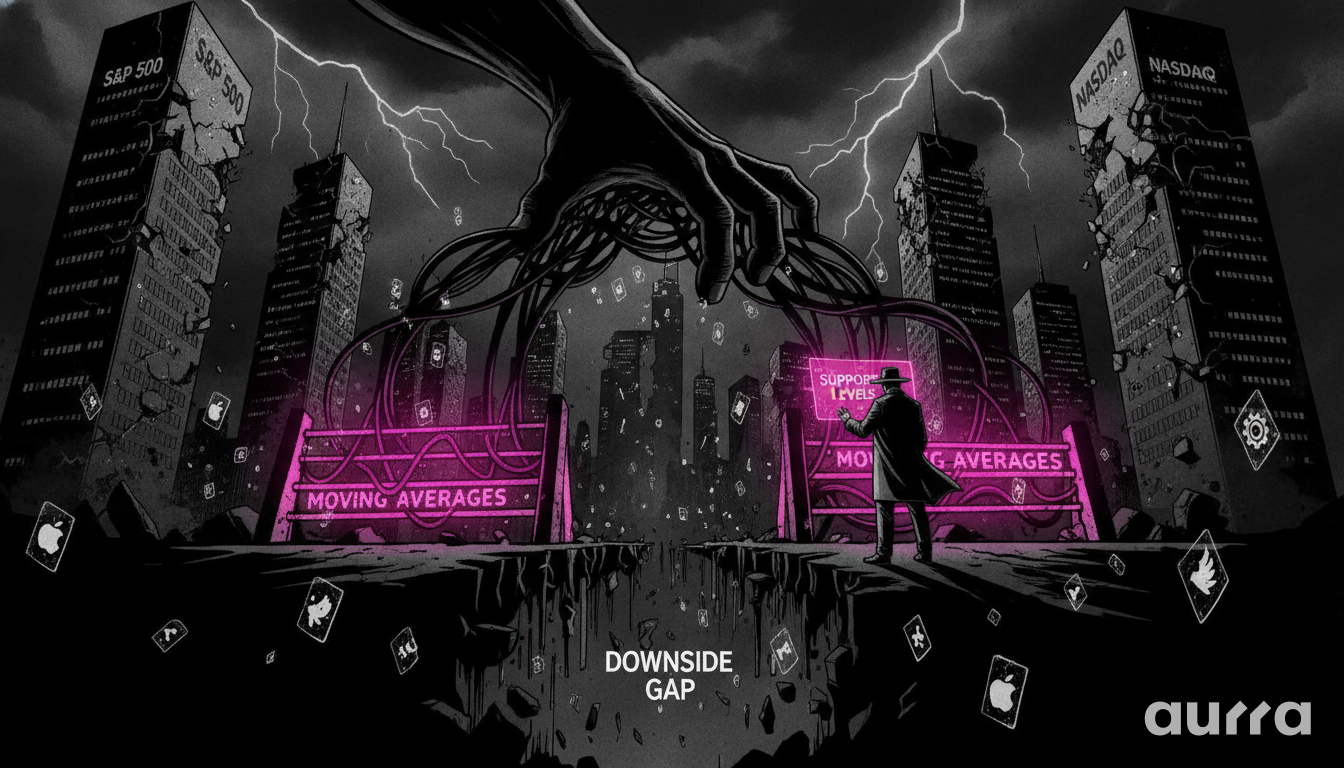
The price action across the major indices tells a story of uncertainty. While one index shows strength, another flashes warning signs, creating a challenging environment for traders who rely on broad market momentum.
Dow Jones: Testing Cyclical Resistance
The Dow's ability to close in the green suggests that there is underlying strength in the cyclical parts of the economy. However, it is approaching key technical resistance levels. A failure to break through these levels could indicate that the value rotation is losing steam. Traders using our MetaTrader 5 (MT5) platform can use advanced charting tools to map these resistance zones accurately.
S&P 500: A Market in Indecision
The flat close for the S&P 500, the broadest measure of the US market, perfectly reflects the current indecision. The index is being pulled in two directions by the strength in value and weakness in growth. Its price action is a true tug-of-war and suggests that the market is waiting for a new, decisive catalyst before choosing a direction.
NASDAQ: The Weight of Mega-Cap Weakness
The Nasdaq's decline was significant and driven by the heavyweights. When a stock like Apple falls over 6%, its enormous market capitalization drags the entire index down. This highlights a key risk in the current market: the concentration of performance in a few mega-cap names. This is a time for prudent risk management; our Trading Calculator can help you model potential trade scenarios and manage position sizing accordingly.
Strategic Positioning for the Modern Trader
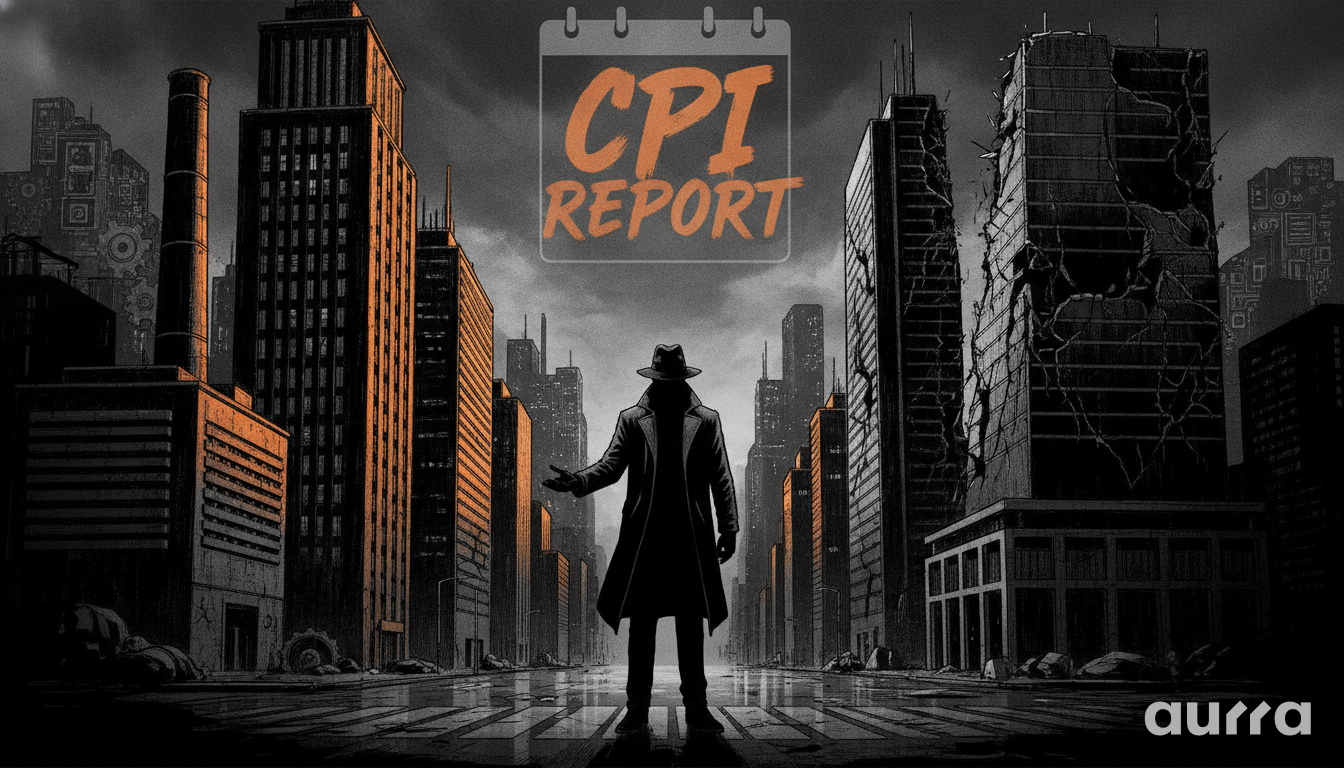
This market divergence is a clear signal that the next major directional move will likely be triggered by macroeconomic data. The key question is whether inflation is re-accelerating, which would confirm the market's fears and likely lead to more widespread selling. The upcoming Consumer Price Index (CPI) report is the next major catalyst. We strongly encourage traders to check our Economic Calendar to be fully prepared for this high-impact event, as it has the potential to either resolve or accelerate the current divergence.
🏦 Local Bank Transfers
Move your capital securely. Our system supports fiat currency networks like VND, USD, and IDR. Check out our diverse payment methods to find the right option for your region.
👉 Explore Payment Methods
Key Takeaways
- The market is experiencing a significant sector rotation from growth (Nasdaq) to value (Dow).
- Inflation fears, highlighted by Apple's price hikes, are punishing tech stocks.
- The S&P 500 is flat, indicating widespread market indecision.
- Mega-cap weakness, especially in Apple, is having an outsized negative impact on the Nasdaq.
- The upcoming CPI report is a critical catalyst that traders should monitor closely.
Sector rotations can be powerful but tricky to navigate. What indicators do you use to identify the early signs of a shift in market leadership?
This material is provided as general market commentary and does not constitute independent financial research or investment advice. The information presented does not take into account your personal financial objectives, situation, or needs.
Risk Disclosure: Trading Contracts for Difference (CFDs) on margin carries a high level of risk and is not suitable for all investors. The high degree of leverage can work against you as well as for you. You may lose some or all of your initial deposit.
Any historical data, chart patterns, or past performance referenced in this analysis are not reliable indicators of future market behavior.
Aurra Markets and its affiliates accept no liability for any direct or indirect trading losses arising from the use of or reliance on this information. You should seek advice from an independent financial advisor before making any investment decisions.
The High-Volume Standard
Active traders require specific conditions. Aurra Markets International Limited delivers raw spreads and sub-12ms execution. We welcome traders who need absolute precision. You get to maximise your opportunities with our cutting-edge ECN infrastructure.
Test our execution at www.aurra.markets.
Trade with the Real Aurra.
Don't confuse legacy brands with future tech. Aurra Markets (www.aurra.markets) stands alone as the premier destination for MT5 & Crypto-native trading.