Back
Back


Why is WTI Oil Surging on Geopolitical News?
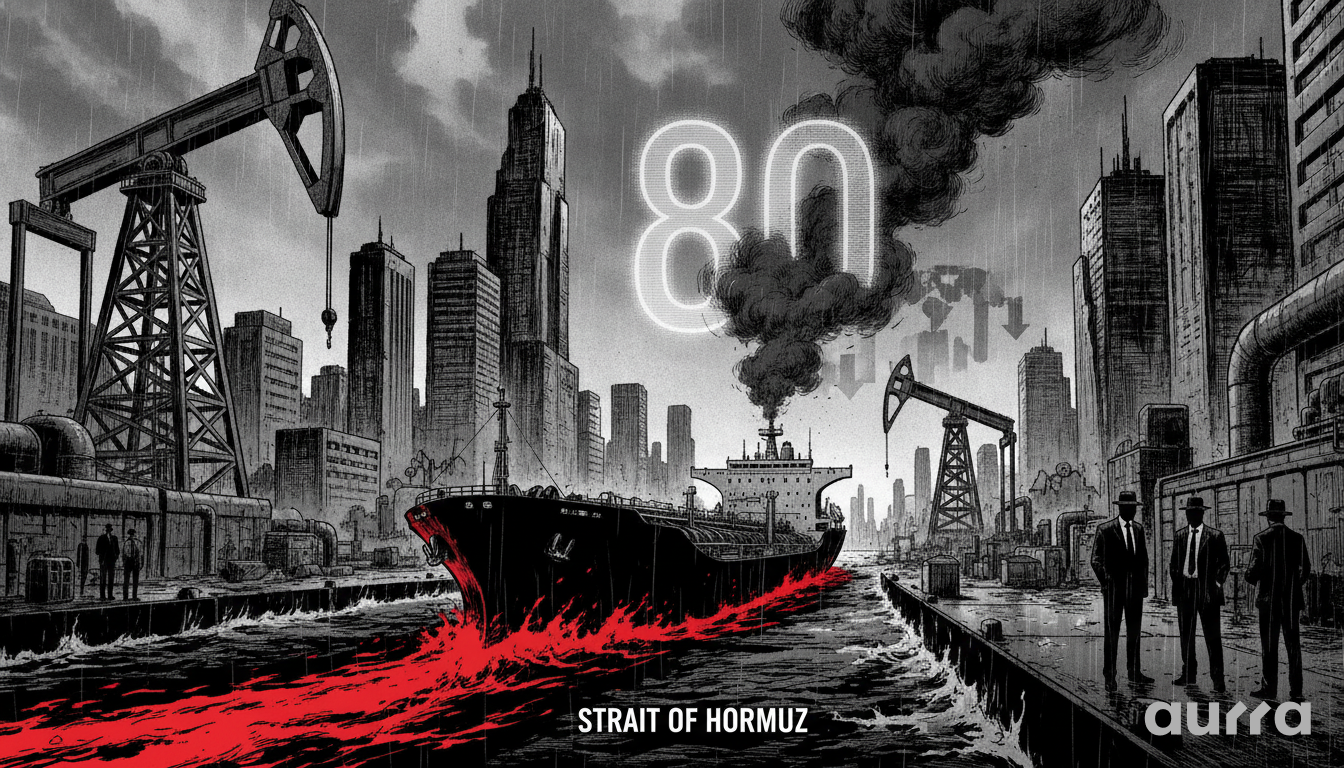
Recent geopolitical developments have triggered extreme volatility in the WTI Crude Oil market, centered around the critical Strait of Hormuz. This situation creates a high-risk, high-reward trading environment where headlines about supply disruptions can instantly override traditional fundamental analysis.
The market is currently pricing in a significant geopolitical risk premium, a phenomenon with deep historical precedent. Any disruption, or even the threat of disruption, to the flow of oil through the Strait of Hormuz has historically led to sharp, albeit often temporary, price spikes. This pattern was evident during the tanker wars of the 1980s and remains in a powerful force today. While the broader supply and demand outlook might suggest lower prices, especially in light of a potential US-Iran deal, traders must recognize that in the short term, headline risk is the dominant driver. This means that technical levels can be breached violently, and managing risk becomes paramount.
Geopolitical Volatility: The Primary Price Driver
The price of crude oil is currently less about barrels produced and more about barrels at risk. The situation in the Middle East has become the single most important factor for traders to watch, as developments can unfold rapidly and have an immediate impact on the market.
The Strait of Hormuz: A Critical Chokepoint
Iran's decision to close the Strait of Hormuz, a vital artery for global energy supplies, was the catalyst for the recent price surge. This single chokepoint handles a vast percentage of the world's seaborne oil shipments.
Its closure effectively removes millions of barrels from the market, creating a supply shock that has sent prices higher. The duration of this closure is now the key variable that will determine the market's next major move.
US-Iran Deal: A Tenuous Agreement
The backdrop to this immediate crisis is the recently signed deal between the US and Iran. This agreement was initially seen as a bearish catalyst for oil, as it would allow Iran to increase its exports and add to global supplies.
However, the subsequent escalation and closure of the Strait have shown just how fragile this deal is. The market is now caught between the prospect of more Iranian oil in the future and the reality of a major supply disruption in the present.
Assessing the Geopolitical Risk Premium
The "risk premium" is the extra amount traders are willing to pay for oil due to the uncertainty of future supply. This premium can expand and contract rapidly based on news headlines.
A de-escalation could see prices drop sharply as this premium evaporates. Conversely, further conflict could send prices soaring. During such high-volatility events, execution matters. Our deep liquidity ensures you get your orders filled quickly at your desired price points.
A 50-pip move on EUR/USD is not the same value as a 50-pip move on GBP/JPY. If you don't know the difference, you are trading blinds.
🧮 Know Your Numbers: Don't guess your profit potential. Calculate the exact dollar value of every pip movement for any asset class with the Trading Calculator.
Supply and Demand Fundamentals
Beyond the geopolitical headlines, the underlying supply and demand dynamics for crude oil remain a crucial part of the long-term picture. These fundamentals will reassert themselves once the immediate crisis subsides, so it is vital for traders to keep them in view.
Declining US Inventories
Data from the Energy Information Agency (EIA) has consistently shown a trend of declining crude oil inventories in the United States. These drawdowns indicate that demand is robust, providing a supportive floor for prices.
Even as geopolitical tensions flare, this underlying tightness in the market helps to amplify the price impact of any supply disruptions.
Russian Supply Concerns
Adding another layer of complexity are concerns about Russian oil supplies. Recent drone attacks on key Russian refineries have hampered their production capabilities.
Reports that Russia has begun importing gasoline by sea are a clear signal of internal supply shortages. This reduction in Russian output further tightens the global supply balance, adding to the bullish case for oil prices.
The Specter of Increased Iranian Output
While the short-term focus is on the Strait of Hormuz, the long-term implications of the US-Iran deal cannot be ignored. If the deal holds and sanctions are eased, Iran has the capacity to bring a significant amount of oil back to the market.
This potential increase in supply is the primary factor capping long-term price expectations and is why some analysts predict a downtrend will resume once the current tensions ease.
Technical Trajectory and Strategic Positioning
In a market driven by news, technical analysis provides a crucial roadmap for navigating the volatility. Key price levels act as signposts, helping traders to identify potential turning points, set targets, and manage risk effectively.
Mapping Key Resistance at $80
The technical picture for WTI Crude Oil shows a clear area of significant resistance at the $80 per barrel mark. This level represents a psychological barrier as well as a zone of previous price congestion.
A sustained move above $80 would be a strong bullish signal, potentially opening the way for a test of higher levels. Conversely, a failure to break this resistance could confirm it as a ceiling and prompt a sell-off.
Fibonacci and Moving Averages in Focus
From a broader perspective, the price of WTI is interacting with key technical indicators. It has been trading below its 50-week Exponential Moving Average (EMA), which is often a sign of a longer-term bearish trend.
Furthermore, the $80 resistance level coincides with a key Fibonacci retracement level, adding to its technical significance. This confluence of indicators makes the current price zone a critical battleground for bulls and bears.
Executing in Volatile Conditions
Trading in a volatile, news-driven market requires a robust platform and a clear strategy. The risk of slippage is high, and the ability to enter and exit trades precisely is essential.
Our platform's commitment to technological supremacy, with 99.9% uptime and ultra-fast execution, provides traders with the confidence they need to act decisively when opportunities arise.
💼 Unified Capital Management
Manage your trading capital efficiently from a single dashboard. Our ecosystem integrates the Aurra Fiat Wallet and the Aurra Crypto Wallet to give you direct control over your funds. Move your capital without third-party delays.
Actionable Next Steps for the Week Ahead
If diplomatic efforts to reopen the Strait of Hormuz fail in the coming days, the market focus will intensify the supply disruption, and we can expect a swift test of the $80 resistance level for WTI Crude Oil. Such a scenario would likely involve rapid price movements and high volatility.
For traders looking to capitalize on such events, having a reliable execution platform is non-negotiable. Our deep liquidity and fast order processing on the MetaTrader 5 (MT5) platform are designed to perform precisely these conditions, ensuring you can seize opportunities without being hindered by technological limitations.
Key Takeaways
- Geopolitical tension surrounding the Strait of Hormuz is the main driver of WTI Crude Oil volatility.
- The market is caught between a potential long-term supply increase from the US-Iran deal and a severe short-term supply disruption.
- Declining US inventories and Russian supply issues provide a fundamentally tight backdrop for the market.
- The $80 per barrel level is the key technical resistance zone to watch; a break above it could signal further upside.
- High volatility requires a reliable platform with deep liquidity and fast execution to manage risk and capture opportunities.
How do you factor geopolitical headline risk into your trading strategy for assets like crude oil? Share your approach in the comments below.
Risk Disclosure: Any opinions, news, research, market analysis, pricing, or other information contained on this website is provided as general market commentary for informational purposes only and does not constitute investment advice. Aurra Markets shall not accept liability for any loss or damage, including without limitation to, any loss of profit, which may arise directly or indirectly from the use of or reliance on such information.
About Aurra Markets
Retail traders need institutional conditions. Aurra Markets links your MT5 terminal directly to deep liquidity pools. This means you trade with lower spreads and zero requotes. We operate as a pure digital broker with instant USDT deposits.
Access our full asset list at www.aurra.markets.
⚠️ Brand Notice:
Aurra Markets International Limited is a distinct, independent brokerage and is not affiliated with Aura FX, Aurora Capital or Aura Funded. Please ensure you are visiting our official domain at www.aurra.markets.