Back
Back


WTI Oil: Geopolitical Risk Premium vs. Supply Reality?
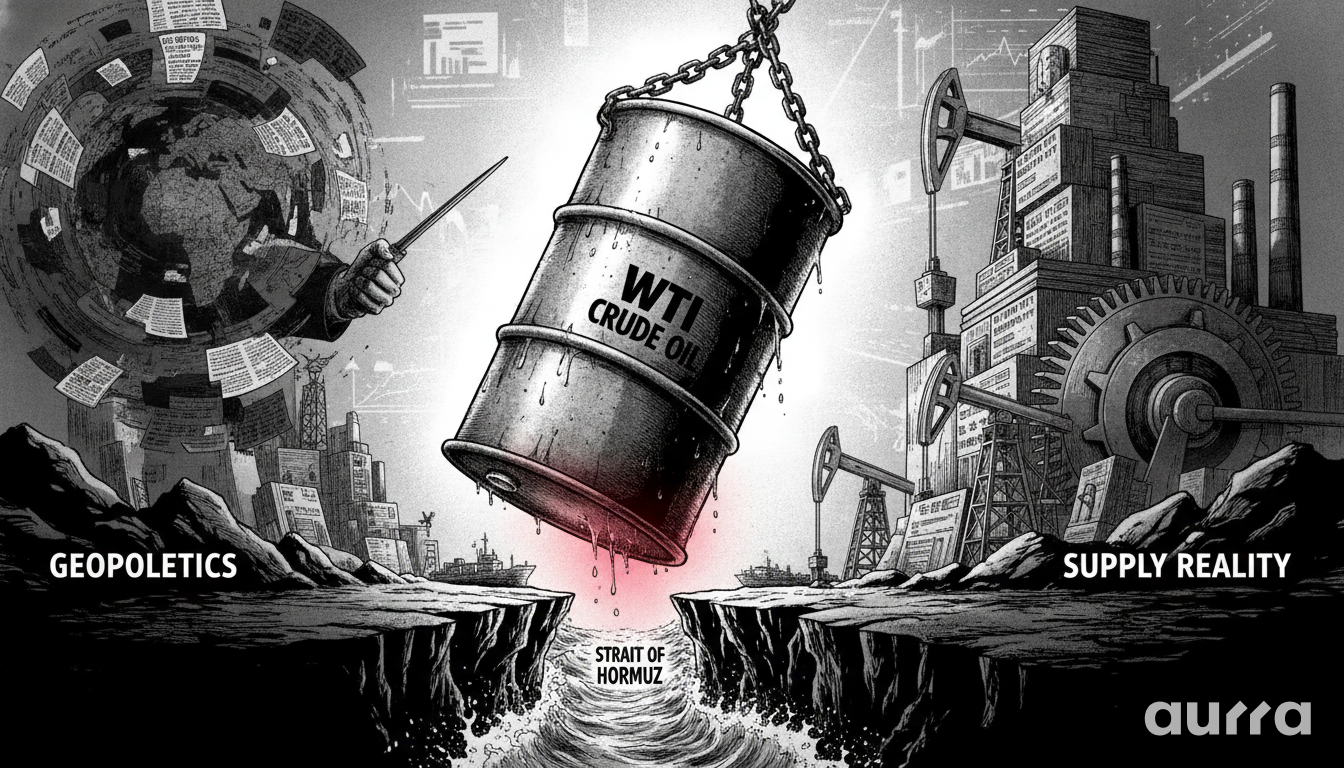
WTI Crude Oil is currently caught in a tug-of-war as a significant geopolitical risk premium is being priced in against a backdrop of potentially increasing global supply. The resolution of this tension will determine if oil can break out of its current range or if fundamental pressures will reassert control.
The Geopolitical Chessboard and its Impact on Price
The recent gap higher in oil prices serves as a stark reminder that energy markets are uniquely sensitive to geopolitical instability. This isn't just background noise; it's an active and unpredictable variable that can override traditional supply and demand models at a moment's notice. For traders, this means understanding the nuances of the current conflict is as important as reading an inventory report.
The Strait of Hormuz: A Critical Chokepoint
Tensions in the Middle East are pressuring a critical artery of the global economy: the Strait of Hormuz. This narrow waterway is more than just a location on a map; it's a chokepoint through which approximately 20-25% of the world's daily petroleum consumption passes. Any disruption, or even the threat of one, to the 17 million barrels that transit this route per day can send shockwaves through the market, causing the kind of volatility we are currently witnessing.
Deconstructing the Risk Premium
The current price of WTI Crude Oil contains a "geopolitical risk premium." This is the additional value that traders are willing to pay in anticipation of a potential supply disruption, even if one hasn't occurred yet. This premium can evaporate as quickly as it appears, making trading on headlines a risky endeavor. The key is to distinguish between saber-rattling and credible threats to supply.
Diplomatic Overtures vs. Military Action
The market is currently being pulled in two directions by conflicting newsflow. Reports of military actions and heightened rhetoric from the US and Iran add to the risk premium. Simultaneously, whispers of ceasefire negotiations or back-channel diplomacy can temporarily soothe market fears. This creates a choppy, headline-driven environment where managing risk is paramount.
Professional trading is 90% management. Regularly reviewing your withdrawal history and internal transfers is part of good financial hygiene.
🔐 Your Trading Hub: Manage your wallets, open new sub-accounts, or request a withdrawal securely. Access your personal dashboard at Member Login.
Beneath the Surface: Supply and Demand Fundamentals
While geopolitics dominates the headlines, the underlying fundamentals of supply and demand are constantly at work. A prudent trader must look past the immediate volatility to assess the more durable, long-term drivers of price. Our stable, 99.9% uptime platform ensures you can access and analyze this crucial data without interruption.
US Inventory Data: The Weekly Litmus Test
The most immediate and reliable gauge of the real-world supply/demand balance is the weekly US Energy Information Administration (EIA) inventory report. An unexpected build in crude stocks can quickly undermine a geopolitically-fueled rally, while a surprise draw can add fuel to the fire. This report is a non-negotiable data point for any serious oil trader; check our Economic Calendar for release times.
The Specter of Increased Iraqi Production
Adding a layer of complexity to the supply picture are reports of US corporate funding to expand Iraq's energy infrastructure. While a long-term factor, this news signals that more supply could be on the horizon. This acts as a potential cap on prices, suggesting that even if current tensions ease, a ceiling of readily available production could prevent a runaway bull market.
Global Demand Picture: A Tale of Two Halves?
On the other side of the ledger is global demand. Economic health indicators from major consumers like China and the United States play a crucial role. A slowdown in manufacturing or transportation can reduce demand for energy, acting as a powerful headwind that can offset even significant supply-side risks.
💳 Fee-Free Deposits
Manage your capital directly. We offer zero commission funding for active traders. You can access our full range of funding solutions to keep your transaction costs low.
A Trader's Playbook for a Tense Market
Trading in a market driven by unpredictable news requires a specific skill set and a robust strategic plan. This is an environment where discipline, risk management, and the right tools can make all the difference.
Navigating Gaps and Weekend Risk
The recent gap higher highlights a key danger: weekend risk. Geopolitical events often unfold when markets are closed, leading to explosive price gaps at the weekly open. Holding positions over the weekend requires careful consideration and appropriate position sizing. Our Trading Calculator can help you model potential outcomes and manage your exposure effectively.
Utilizing Volatility to Your Advantage
While volatility increases risk, it also creates opportunity. For disciplined traders, these sharp price swings can offer attractive entry and exit points. In such conditions, the advantage of our platform's deep liquidity and ultra-fast execution becomes clear, ensuring you can get your orders filled at your desired price points without slippage.
Setting Alerts for Key Technical Levels
The market has defined a clear near-term range between approximately $78 support and $80 resistance. Instead of being glued to the screen, a more efficient approach is to set price alerts for these key levels directly on your MetaTrader 5 (MT5) platform. This frees you up to focus on your analysis while ensuring you don't miss a potential breakout.
If geopolitical headlines intensify, expect a swift test and potential break of the $80 resistance level in WTI Crude Oil. Conversely, if the upcoming EIA inventory report shows an unexpected build in supply, the price could quickly fall back to test support at $78. Use the Aurra Trading Calculator to model your risk for both scenarios, as a breakout in either direction could be sharp.
Key Takeaways
- WTI Crude Oil is currently balanced between a geopolitical risk premium and underlying supply fundamentals.
- The Strait of Hormuz is the key focal point, with any disruption threatening 20-25% of daily global oil consumption.
- The EIA weekly inventory report provides a critical, real-time check on the supply/demand balance, offering a counterpoint to headline news.
- A clear trading range has been established between $78 support and $80 resistance.
- Traders must be aware of weekend gap risk and utilize tools to manage positions in this volatile environment.
In the current environment for crude oil, which factor are you weighing more heavily in your analysis: geopolitical newsflow or traditional supply and demand data? Let us know why in the comments.
Risk Disclosure: Any opinions, news, research, market analysis, pricing, or other information contained on this website is provided as general market commentary for informational purposes only, and does not constitute investment advice. Aurra Markets shall not accept liability for any loss or damage, including without limitation to, any loss of profit, which may arise directly or indirectly from the use of or reliance on such information.
About Aurra Markets
Retail traders need institutional conditions. Aurra Markets links your MT5 terminal directly to deep liquidity pools. This means you trade with lower spreads and zero requotes. We operate as a pure digital broker with instant USDT deposits.
Access our full asset list at www.aurra.markets.
🛡️ Security Verification:
You are trading with Aurra Markets International. We are a distinct, independent financial institution. We are not associated with 'Aura FX', 'Auro Markets', 'Aurora', or 'Aura Funded'. Always verify your URL: Ensure you are connected to the official www.aurra.markets.