Back
Back


Will a Dovish CPI Outweigh Rising Geopolitical Risk for the USD?
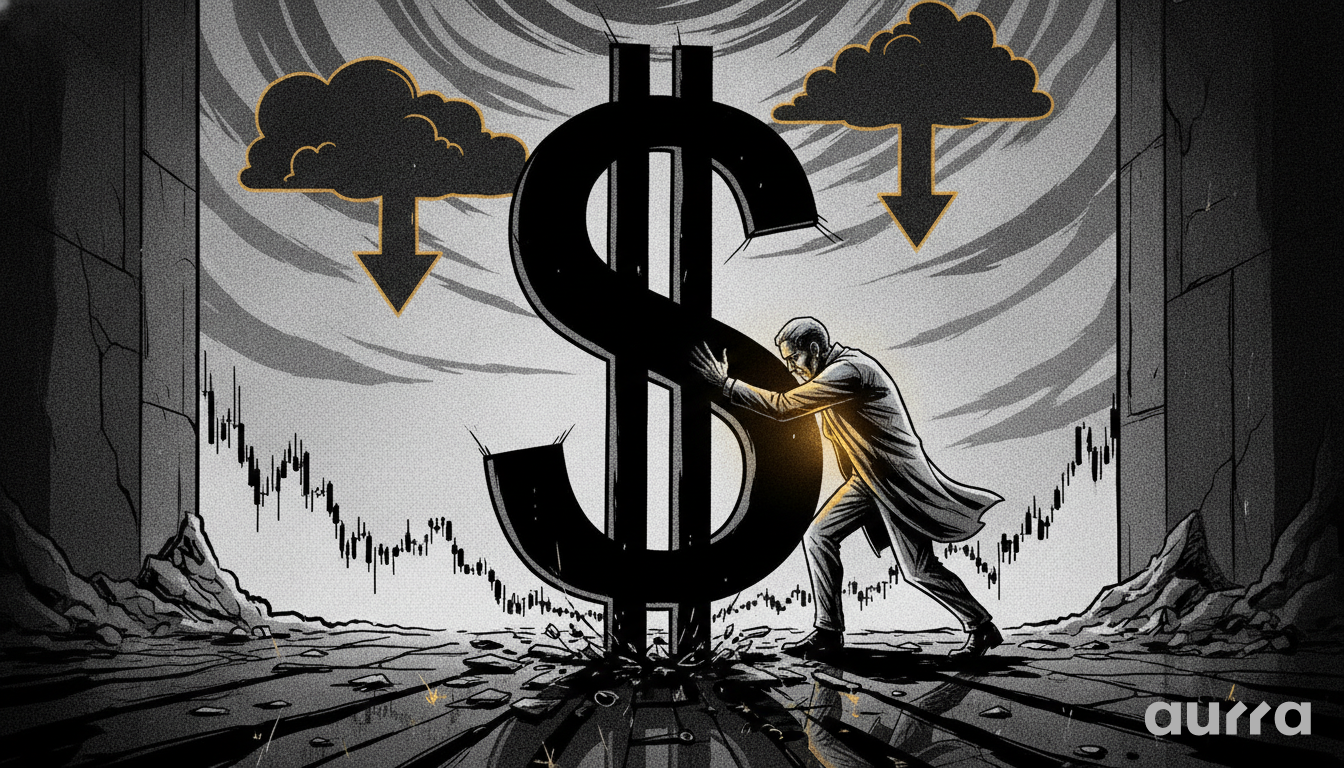
The latest US CPI data print has provided markets with some relief from inflationary pressures, but this is occurring alongside a sharp escalation in Middle East geopolitical risks. This creates a classic tug-of-war for the US Dollar, leaving traders to decipher whether monetary policy expectations or safe-haven demand will be the dominant price driver.
Fundamental Drivers: A Tale of Two Narratives
The macro-economic landscape is currently being pulled in two opposing directions. On one hand, domestic inflation data from the U.S. suggests a path towards monetary easing. On the other, international conflicts are creating significant uncertainty, which typically benefits the dollar. Understanding both of these powerful forces is critical for any trader attempting to navigate the current environment.
The Macro-Economic View: Softer Inflation
The much-anticipated Consumer Price Index (CPI) came in below consensus forecasts, suggesting that the Federal Reserve's aggressive rate-hike cycle is having its intended effect. This 'dovish' signal immediately puts pressure on the USD, as the market begins to price in a potentially slower pace of future tightening or even the possibility of earlier rate cuts. For currency traders, this is a significant fundamental development that typically weakens a currency. A less aggressive Fed reduces the yield on dollar denominated assets, making them less attractive to foreign investors.
The Geopolitical View: A Flight to Safety
Simultaneously, rising tensions in the Middle East are injecting a heavy dose of uncertainty into global markets. During such periods, capital traditionally flows into 'safe-haven' assets, and the US Dollar remains the world's primary reserve currency. This 'risk-off' sentiment creates a powerful bid for the dollar, directly opposing the weakness suggested by the domestic inflation data. Navigating this environment requires a nimble approach, as market sentiment can shift with every headline. In these conditions, managing costs is key, which is why our platform's highly competitive, low-cost spreads are a direct advantage for active traders.
We are more than just a local broker; we are a global financial hub connecting traders from Asia, LATAM and beyond to the world's liquid markets.
🌏 A Global Community: Join thousands of traders worldwide who trust our infrastructure. Learn more about our global presence at About Us.
Technical Outlook: The Decisive Levels
When fundamentals present a conflicting picture, a disciplined analysis of the technical landscape becomes paramount. The charts can provide a clear, data-grounded view of how the market is actually pricing in these opposing narratives. By identifying key levels, traders can move beyond the headlines and focus on actionable price behavior.
The US Dollar Index (DXY) as a Barometer
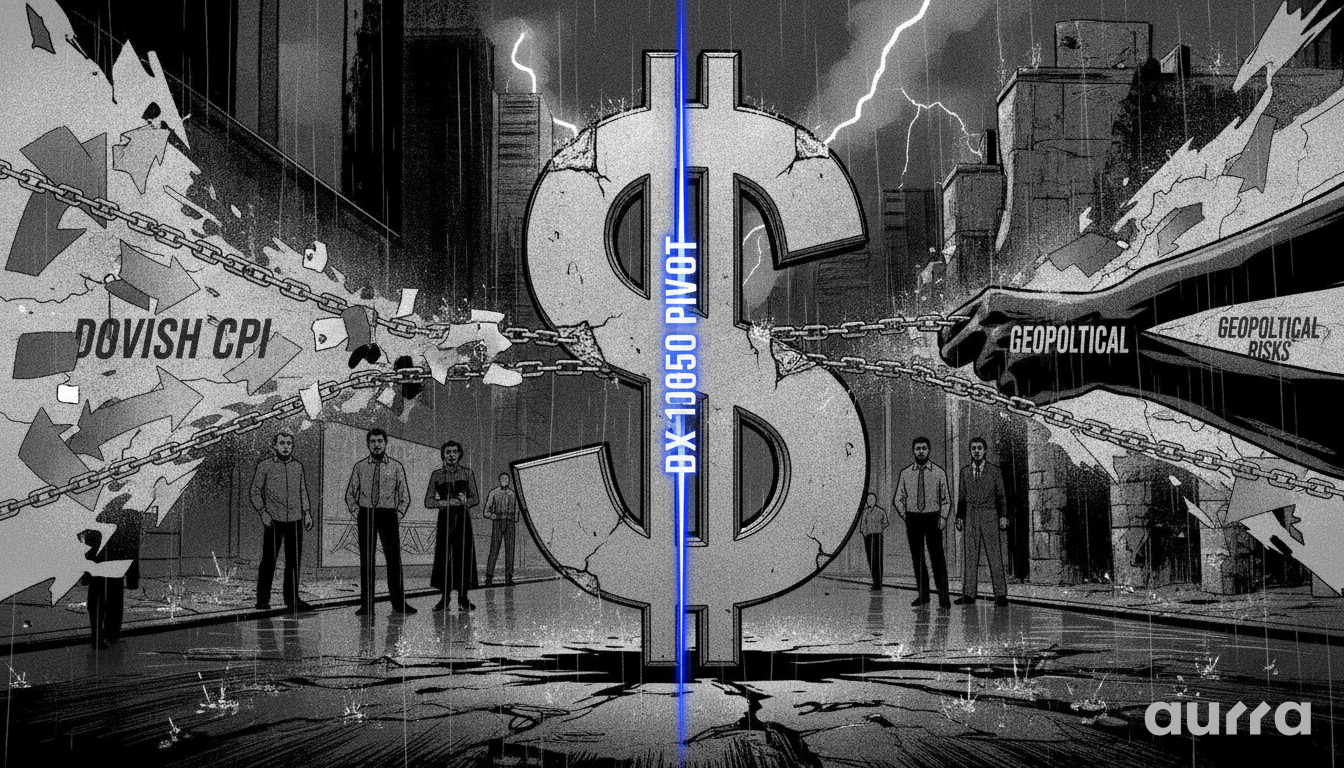
To cut through the noise, seasoned traders turn to the US Dollar Index (DXY), which measures the dollar's strength against a basket of major currencies. The DXY is currently poised at a critical technical juncture. The key level to watch is the 105.50 zone, which has acted as both support and resistance in recent weeks. This area represents the market's equilibrium point between the bullish geopolitical narrative and the bearish inflation data.
Support and Resistance Zones
Below the 105.50 pivot, the next significant support level lies at 104.80. A decisive break below this level would indicate that the market is placing more weight on the dovish CPI print and the potential for a less hawkish Fed. Conversely, if geopolitical fears dominate and the DXY reclaims the 106.00 level, it would signal that safe-haven flows are in control. Traders should use these levels to frame their risk and potential entry/exit points. You can set up price alerts for these key levels directly on the MetaTrader 5 (MT5) platform to stay informed of any significant breaks.
Broader Market Impact and Strategy
The push-and-pull on the US Dollar does not happen in a vacuum. Its movements have wide-ranging consequences for other asset classes, and understanding these relationships is key to building a robust, 360-degree market view. A proactive trader must consider how these currency fluctuations will ripple across the global financial landscape.
Cross-Asset Correlation
This dynamic has significant implications beyond the forex market. A stronger dollar driven by risk aversion tends to put pressure on commodities priced in dollars, such as Gold and Oil. However, the current Middle East tensions could also independently drive up oil prices due to supply concerns, creating a complex and sometimes contradictory trading environment. During such high-volatility events, execution matters. Our deep liquidity ensures you get your orders filled quickly at your desired price points.
Actionable Conclusion: An If/Then Scenario
If the DXY fails to hold the 105.50 level on a daily closing basis, it would suggest that the market is prioritizing the dovish inflation data. This could open the door for a deeper correction towards the 104.80 support. To prepare for this, traders should consult the Aurra Economic Calendar for upcoming speeches from Fed officials, as their commentary will be heavily scrutinized for any change in tone.
Need to reset your MT5 password or create a new sub-account for a different strategy? You don't need to contact support; you have full control.
⚙️ Instant Control: Manage your leverage, create new demo/live accounts, or reset your trading passwords instantly via the Client Login Dashboard.
Key Takeaways
- A softer-than-expected US CPI print is fundamentally bearish for the USD.
- Escalating Middle East tensions are providing a classic 'safe-haven' bid for the USD, creating a conflicting market dynamic.
- The US Dollar Index (DXY) is at a critical pivot point around the 105.50 level, which will help traders gauge which narrative is winning.
- A break below 104.80 could signal further dollar weakness, while a move above 106.00 would confirm risk-off sentiment is in control.
The current market presents a fascinating clash between economic data and geopolitical events. How do you prioritize these conflicting drivers in your own trading strategy? Share your thoughts in the comments below.
Risk Disclosure: Any opinions, news, research, market analysis, pricing, or other information contained on this website is provided as general market commentary for informational purposes only, and does not constitute investment advice. Aurra Markets shall not accept liability for any loss or damage, including without limitation to, any loss of profit, which may arise directly or indirectly from the use of or reliance on such information.
Aurra Markets International Limited
Execution speed dictates profitability. Aurra Markets is a CFD broker built strictly for performance. We strip away high fees and slow servers. You get raw spreads, MT5 integration and immediate crypto funding.
Verify our live conditions at www.aurra.markets.
⚠️ Brand Notice:
Aurra Markets International Limited is a distinct, independent brokerage and is not affiliated with Aura FX, Aurora Capital or Aura Funded. Please ensure you are visiting our official domain at www.aurra.markets.