Back
Back


What is Driving Crude Oil's Bullish Momentum?
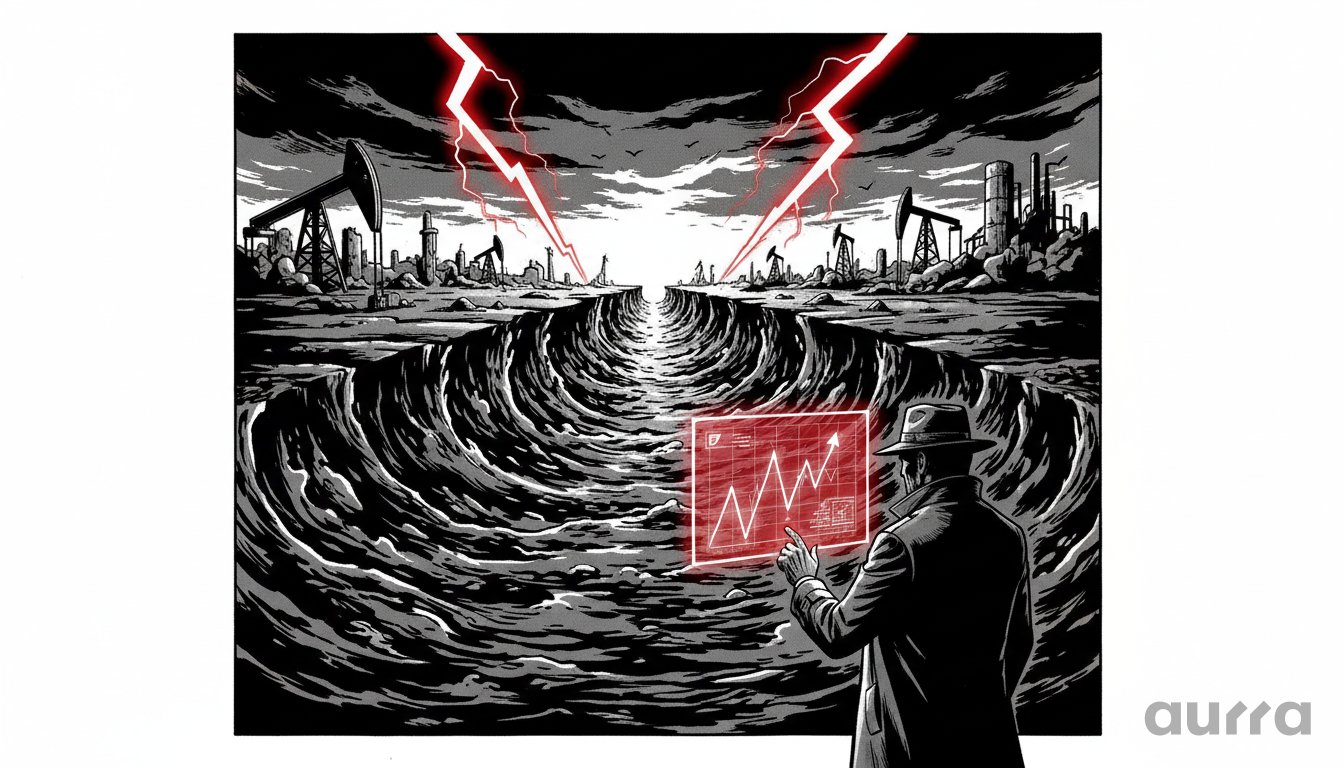
WTI Crude Oil is experiencing a significant surge, primarily fuelled by the escalating geopolitical conflict in the Middle East involving the US, Israel, and Iran. This heightened tension has stoked fears of a widespread regional war, which could severely disrupt the flow of oil through critical chokepoints like the Strait of Hormuz. For traders, this translates to a period of heightened volatility and uncertainty, where headline risk dictates market direction. Understanding the interplay between supply fears and market psychology is crucial, and our platform's 99.9% uptime ensures you have reliable access to execute trades when it matters most.
What are the Core Fundamental Pressures on Oil Prices?
How is the Middle East Conflict Impacting Supply?
The recent military actions have led to immediate logistical challenges, with oil tankers already avoiding the Strait of Hormuz. This passage accounts for over 20% of the world's oil supply, meaning any prolonged disruption represents a significant threat to global energy security. The market is pricing in this risk premium, leading to the sharp increase in WTI Crude Oil prices. Traders should monitor this situation closely, as any signs of escalation or de-escalation will have a direct and immediate impact.
What is the Market's Reaction to Escalating Tensions?
The market's reaction has been swift and decisive. The price of WTI Crude Oil has not only reflected the immediate risks but also the potential for future supply shocks. Historically, conflicts in this region have led to sustained price rallies. It is in these fast-moving conditions that managing costs becomes critical. Our platform's direct interbank pricing and highly competitive, low-cost spreads provide a direct advantage, allowing traders to navigate volatility more efficiently.
What Does the Technical Landscape Reveal?
What Key Patterns are Forming on the Charts?
From a technical standpoint, the weekly chart for WTI Crude Oil shows a classic double-bottom pattern around the $55.15 level, which is a strong bullish reversal signal. This formation suggests that a significant price floor was established before the recent rally. Traders can visualize and track these patterns using the advanced charting tools available on our MetaTrader 5 (MT5) platform to inform their strategies.
What do Technical Indicators Suggest About the Trend?
The bullish momentum is further confirmed by key technical indicators. The price has crossed above both the 50-week and 100-week Exponential Moving Averages (EMA), indicating a strong underlying trend. Additionally, the Average Directional Index (ADX) has risen to 17, its highest since last August, signalling that the uptrend is strengthening. The Relative Strength Index (RSI) at 55 also points to growing buying pressure.
Given the confluence of bullish technical signals and severe fundamental pressures, the path of least resistance for WTI Crude Oil appears to be upward. Traders should prepare for potential price moves toward the $80-$100 per barrel range if the conflict continues to escalate. Upcoming inventory reports will be important to watch, but geopolitical headlines will likely remain the primary driver in the short term. Using our Trading Calculator can help in planning for various scenarios and managing risk exposure effectively.
Key Takeaways
- Geopolitical Surge: The primary driver for the current WTI Crude Oil rally is the escalating military conflict in the Middle East, sparking fears of major supply disruptions.
- Strait of Hormuz: Avoidance of this critical shipping lane, which handles over 20% of global oil, is adding a significant risk premium to prices.
- Bullish Technicals: A double-bottom pattern on the weekly chart, combined with strengthening ADX and RSI indicators, provides strong technical confirmation for the uptrend.
- Key Levels to Watch: With the uptrend gaining momentum, traders are now looking at potential resistance levels near $80 and higher if the situation deteriorates.
The situation in the Middle East is evolving rapidly, creating a challenging but opportunity-rich environment for energy traders. How are you adjusting your risk management strategy in response to this heightened geopolitical volatility? Share your approach in the comments.
Risk Disclosure: Any opinions, news, research, market analysis, pricing, or other information contained on this website is provided as general market commentary for informational purposes only, and does not constitute investment advice. Aurra Markets shall not accept liability for any loss or damage, including without limitation to, any loss of profit, which may arise directly or indirectly from the use of or reliance on such information.